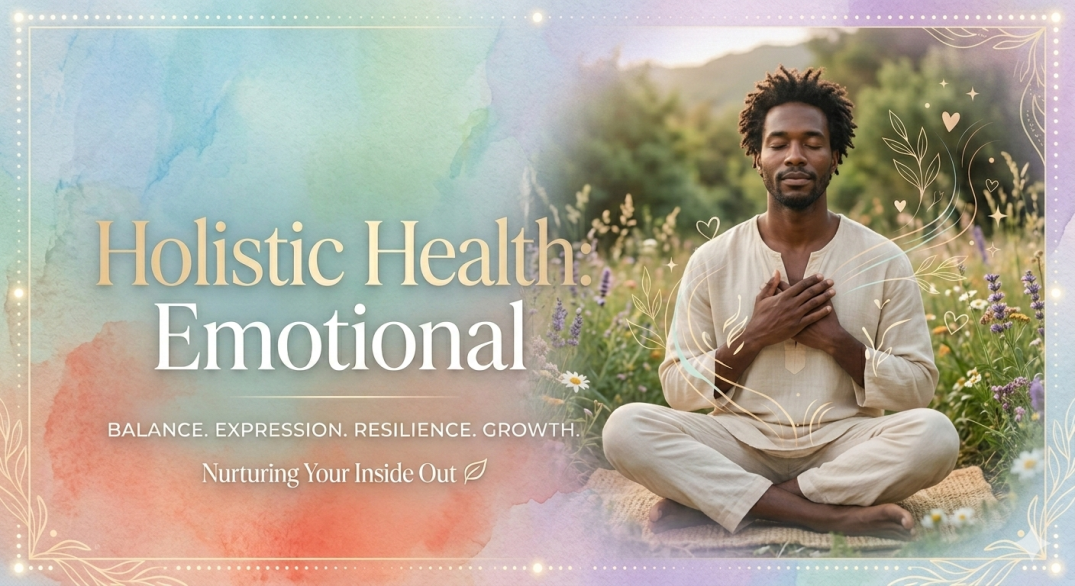
In the framework of holistic health, the emotional aspect focuses on the ability to navigate the internal landscape of feelings, moods, and reactions.
While physical health deals with the “hardware” of the body, emotional health is the “software” that processes how we experience life.
Core Components of Emotional Holistic Health
The emotional pillar isn’t just about being “happy”; it’s about emotional agility—the capacity to remain grounded regardless of the circumstances.
Self-Awareness – The ability to identify what you are feeling in real-time (e.g., recognizing the physical sensation of anxiety before it becomes a full panic).
Emotional Regulation – Developing the tools to manage intense emotions like anger, grief, or stress so they don’t dictate your actions.
Resilience – How quickly you “bounce back” from setbacks or trauma.
Empathy – The capacity to understand and share the feelings of others, which bridges the gap between emotional and social health.
The Mind-Body Connection
In holistic health, the emotional aspect is never isolated. It is deeply intertwined with the other pillars through biochemical processes.
The Nervous System
When emotional health is taxed (chronic stress), the body stays in a “fight-or-flight” state (sympathetic; nervous system), which can lead to physical ailments like high blood pressure or digestive issues.
Hormonal Balance
Emotions trigger the release of chemicals. Joy and connection release oxytocin and dopamine, while perceived threats release cortisol, affecting everything from sleep cycles to immune response.
Indicators of Strong Emotional Health
Boundaries – Healthy Expression: Saying “no” without guilt. / Warning Signs: People-pleasing or burnout.
Expression – Healthy Expression: Sharing feelings constructively. / Warning Signs: Repressing emotions or “explosive” venting.
Coping – Healthy Expression: Using meditation, journaling, or movement. / Warning Signs: Relying on numbing agents (alcohol, scrolling).
Perspective – Healthy Expression: Seeing challenges as growth opportunities. / Warning Signs: Feeling victimized by circumstances.
How it relates to your journey
Cultivating this pillar often involves practices like mindfulness and shadow work, ensuring that the “Spirit & Soul” are just as nourished as the physical body.
Nurturing your inside out.
In the next update, we’ll focus on the Spirit aspect/pillar of holistic health.
GerMichael
 Spirt & Soul Holistics