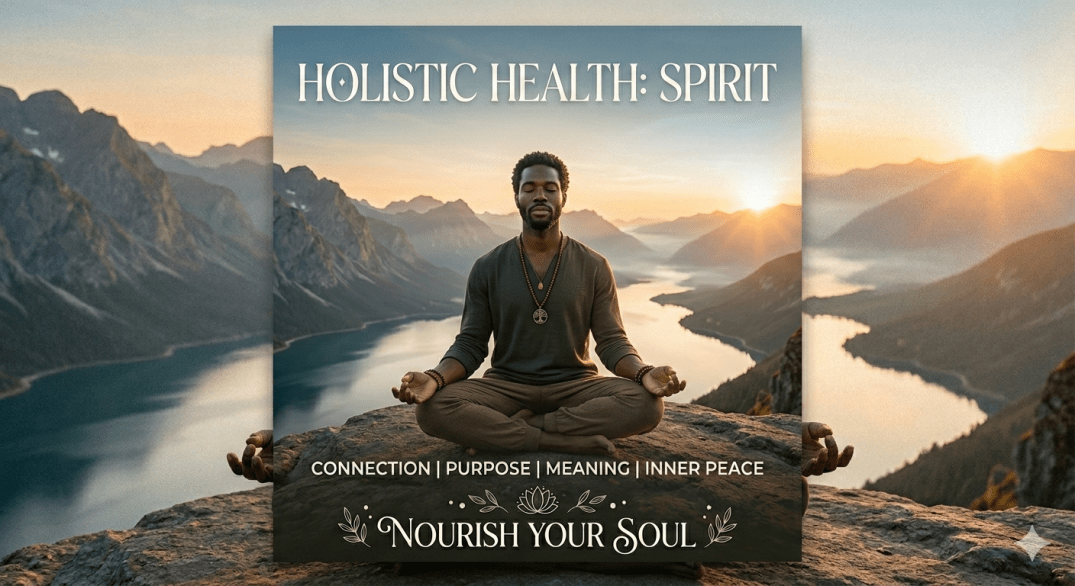
The Spirit aspect is often the most personal and subjective, yet it serves as the foundation for the “whole person” approach.
The spiritual aspect focuses on connection, purpose, and inner peace.
Defining the Spiritual Pillar
In a holistic sense, it refers to the intangible energy and values that drive your existence.
Here is how it is typically defined.
Connection to Something Greater
This is the sense of being part of a larger cosmic order. Whether that is a connection to nature, the universe, a higher power, or the collective human experience, it’s the realization that you are not an isolated island.
Meaning and Purpose
The spiritual pillar asks the “Big Questions”: Why am I here? What is my contribution? Having a sense of purpose acts as a North Star, providing resilience during difficult physical or emotional times.
Inner Harmony and Essence
This involves understanding your core values and living in alignment with them. When your daily actions match your internal beliefs, you experience “spiritual “ease” rather than “dis-ease.”
Transcendence
The ability to find peace and stillness despite external circumstances. This is often cultivated through practices that quiet the mind and allow the “inner self” to surface.
Why It Matters in Holistic Health
In a holistic framework, the spirit is the integrator.
Physical Impact – Spiritual practices like meditation or prayer can lower cortisol levels and blood pressure.
Mental Impact – A strong sense of purpose can combat depression and provide the motivation needed to maintain mental discipline.
Common Practices for Spiritual Health
Mindfulness & Meditation – Tuning into the present moment.
Time in Nature – Reconnecting with the natural rhythms of the earth.
Journaling – Exploring internal thoughts and discovering personal truths.
Acts of Service – Connecting with others through altruism and community.
Ritual – Creating sacred space in daily life, such as lighting a candle or practicing gratitude.
In essence, the Spirit pillar of holistic health isn’t just about religion – it’s about connection. It’s the tangible energy that links your inner self to the world around you.
Key focus areas are:
Meaning & Purpose
Inner Harmony
Connection to Nature/Universe
Values-aligned Living
Physical health is the engine. Mental health is the driver. Spiritual health is the fuel. Without purpose and inner peace, the journey feels empty. Holistic health means nourishing the soul just as much as the body.
Spiritual wellness is living in alignment with your highest values. It’s that “inner click” when your actions match your soul’s intent.
How is your Spirit today?
In the next update, we’ll focus on the Soul aspect/pillar of holistic health.
GerMichael

 Spirt & Soul Holistics